

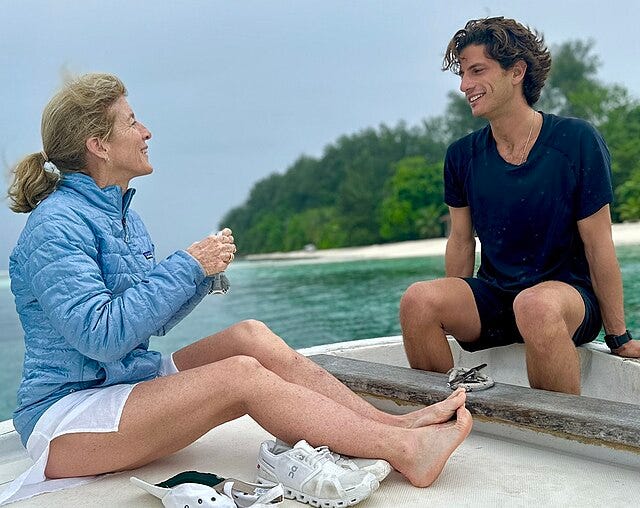
This is part V, the last installment (for now) of an ongoing series on the June 2026 Democratic primary for New York’s 12th Congressional District. You can check out part I here (Micah Lasher), part II here (Alex Bores), part III here (why insurgent outsiders will struggle in this race), and part IV here (Cam Kasky). I published the Kasky piece on January 13th. On January 14th, he dropped out. It’s a shame, I spent a lot of time writing that piece, but so it goes.
This is the last entry (for now) in my series on the upcoming primary for New York’s Twelfth Congressional District. I’ve been lucky enough to have some new subscribers come onboard during this project, and some of them may be wondering why this blog is called Ghost Runner. The answer is that this is a blog about ghosts. Ghosts are everywhere. The tradition of all dead generations weighs like a nightmare on the brains of the living. The past is never dead, it isn’t even past. You did not fall out of a coconut tree.
Sometimes, it is helpful to identify a ghost directly, by name, in the hopes that you or someone else might exorcise it. I tried this with the Yankees and the ghost that haunts their shortstops a few years ago (Volpe’s career has only gotten spookier since then), or with the looming specter of Jessica Tisch. Other times, I worry that this approach gets too confusing, so I just stick to describing the past and how it’s relevant, without resorting to spectral metaphors. Tisch aside, I have used the latter strategy for most of my NYC politics coverage here (unlike the New Yorker’s Eric Lach, for example).
But it is completely impossible to describe Jack Schlossberg’s family without resorting to supernatural metaphors. The Kennedys are cursed. You don’t need me to tell you, this is some of the most famous paranormal activity in American history, but just to recap: Schlossberg’s grandfather was assassinated, his great-uncle was also assassinated, two of his grandmother’s children died as infants, his uncle died in a plane crash, his other great uncle narrowly survived a different plane crash, and also survived a car crash (his passenger was not so lucky), and most recently, his older sister just died of leukemia at age 35 last week. The mind cannot rationally comprehend this much tragedy. It demands an irrational, superstitious explanation.
When Jack Schlossberg’s other great-uncle, Massachusetts Senator Ted Kennedy, died at age 77 in 2009, newly elected President Barack Obama gave a eulogy at his funeral. It is one of his very best public speeches. In it, Obama frames the personal tragedies that Ted suffered not as a curse, but as evidence of Ted’s resilience and strength of spirit:
“It’s a string of events that would have broken a lesser man. And it would have been easy for Ted to let himself become bitter and hardened; to surrender to self-pity and regret; to retreat from public life and live out his years in peaceful quiet. No one would have blamed him for that. But that was not Ted Kennedy. Through his own suffering, Ted Kennedy became more alive to the plight and the suffering of others.”
This can be an incredibly potent message for a politician. It was, for example, the fundamental engine of Joe Biden’s career, and the main reason he was elected President in 2020. He had lost his first wife and daughter in a car crash, and then his eldest son to cancer, and through this suffering, he could perform grief to a COVID-stricken, grieving nation, in a way that felt authentic and not calculated. It made him seem fundamentally sympathetic.
Jack Schlossberg is not running that playbook with his sister’s death. I don’t blame him. It’s very difficult to pull off without seeming opportunistic (I remember thinking even Biden was a little opportunistic at times during his presidential campaign in the summer of 2019, finding ways to bring up Beau on a debate stage no matter what he was asked). And it must be extraordinarily painful to go around telling strangers about your grieving process. I can’t imagine what Schlossberg is going through right now, and if he doesn’t want to talk about it publicly, that’s his business.
The playbook he has selected instead, however, is a brutal watch. Schlossberg wants you to vote for him because he’s a Kennedy, and because you, a Democrat, might look back nostalgically to a time when you voted for Kennedys and things were good. That’s it. It’s not a compelling pitch, and no one, not even Schlossberg himself, seems compelled.
I mean, take a look at this vertical video he posted a couple weeks ago, a collaboration with NYC-based travel influencer Johnny Murtaugh. It’s an odd choice for a crossover post during a congressional campaign, both because Schlossberg already has more followers than Murtaugh, and because Murtaugh’s target audience is prospective NYC tourists. Actual NY-12 voters don’t follow this guy, because we are not prospective NYC tourists. We don’t need to learn more about the Statue of Liberty or the Empire State Building.
“Did you know that Grand Central Station was almost completely destroyed but Jackie Kennedy stepped in to save it?” Murtaugh asks in a classic sped-up hyperactive TikTok voice, standing outside Grand Central with Schlossberg. “That’s right, she led a public pressure campaign to stop its demolition!” Schlossberg replies, with all of the canned enthusiasm of a hostage reading out his kidnappers’ demands at gunpoint. The entire ninety-second reel is like this. Murtaugh and Schlossberg wander around Grand Central, filming ten second clips where they recount the saga of Jackie and Grand Central, a saga that they had already captured in full with the opening two sentences. Schlossberg is clearly reading from a script, and has been given enough public speaking training that he knows to annunciate, and to place emphasis on specific key words, but he looks bored out of his mind. Whenever it isn’t his turn to speak, you see his gaze wander off, even though it is never not his turn to speak for more than five seconds.
In fairness, I’m not sure a generational vertical video talent like Zohran could have done much better with this material, which is incredibly dry, and completely devoid of details that might give it texture or character. The message seems to be that Jack’s grandmother had excellent taste in architecture, and that it was a good thing that we had unelected elder stateswomen like her back in the 1970s to keep the ruffian bureaucrats in check. To the extent that this saga has any relevance in current NYC politics, it’s a negative one. Well-connected rich people with purportedly good taste in architecture are a big reason that we have a massive housing crisis. But putting that part aside, are we meant to believe that Schlossberg has inherited his grandmother’s good taste? And that this is why he’s a better candidate for Congress than the two guys who’ve been in the trenches of local politics for decades? The subliminal message of this video, and of all of Schlossberg’s content, is that he’s a Kennedy, and that this should be enough for you.
Bewilderingly, Democrats did use to just hand coveted elected offices to Kennedys, sight unseen. As just one of the many examples: in 2009, a vacancy opened up in New York’s US Senate delegation, after Hillary Rodham Clinton, another relative of a former President, left the Senate to become Secretary of State. New York Governor David Paterson, a Democrat, was empowered to appoint an interim replacement before a special election in 2010, and Caroline Kennedy, JFK’s daughter and Schlossberg’s mother, raised her hand. Though she had no experience in public office, she immediately secured endorsements from NYC Mayor Michael Bloomberg, former Mayor Ed Koch, and a slew of state legislators, and her bid fell apart only because it quickly became clear that she was not ready for primetime, bombing a string of interviews, including one with NY1 where she said “you know” 168 times in 30 minutes. Instead, she accepted ambassadorships to Japan, and then Australia, as a consolation prize. But in 2009, the Kennedy family still had such a grip over the Democratic Party, that a boring, mediocre, not-actively-humiliating performance in these interviews would have been enough to secure Caroline a gift-wrapped Senate seat as a kind of birthright.
This power has dissipated since Ted’s death. These days, the Kennedys cannot even keep their own brethren in line. In a New York Magazine feature last summer, reporter Reeves Wiedeman described the state of the sprawling family, as dozens of Kennedys across four generations with varying levels of access and control inside the Democratic party all watched helplessly while Robert F Kennedy Jr. hijacked their brand and used it to support vaccine skepticism, anti-science conspiracy theories, and eventually, Trump. “They confronted him in texts, on family Zooms, and when they saw him in Hyannis.” Wiedman writes. “They published op-eds with headlines like “Ignore My Brother Bobby.” They appeared on MSNBC and CNN; they tweeted and Instagrammed… What’s humbling for all the other Kennedys is that none of their efforts to stop Bobby worked.”
The family name still has some juice, or Schlossberg wouldn’t have been able to even launch his campaign. Everyone knows and likes his mother, and that must be helpful for things like fundraising (Biden White House Chief of Staff Ron Klain recently hosted a fundraiser for Schlossberg at his home in DC, for example). But isn’t this kind of embarrassing?
Our world is run by nepo babies these days. Our president rose to prominence because he inherited his father’s real estate empire, promptly ran it into the ground, and then somehow parlayed that into a popular network television show. Until recently, the most powerful man in the state was the first-born son of a widely beloved governor. JFK himself was a nepo baby: he rose up within the Democratic party only because his father, one of the richest men in the country at the time, had deep ties within the Roosevelt-era Democratic Party, and brazenly used them to anoint his sons to various levels of government.
It’s frustrating to see others handed things, when normal people spend years working tirelessly for even a slim chance to earn them. It gives the lie to the myth of meritocracy, a foundational tenet of our capitalist social order. But the proper response to a nepo baby is not envy, it is pity. They will never be able to escape the shadow of his parents, no matter how badly they want to, or how hard they try. No one will ever believe that they could have gotten there on their own, and there’s nothing they can do to prove it besides quit the family business and become a doctor.
We have far too many examples of the psychological damage that this kind of burden can cause, both in real life, and in popular fiction. The television show for which this series of blogs is named has explored this dynamic with far more specificity and depth than I ever could. In the 2019 film Knives Out, the best-selling author patriarch fires his adult son from his in-house publishing company right before his demise, telling him: “I’ve done you a terrible disservice. All these years, I’ve kept you from building something of your own.”
In the eulogy, Obama claims that Ted Kennedy escaped the shadow of his relatives, and did build something of his own: “The greatest expectations were placed upon Ted Kennedy’s shoulders because of who he was, but he surpassed them all because of who he became. We do not weep for him today because of the prestige attached to his name or his office. We weep because we loved this kind and tender hero who persevered through pain and tragedy.”
I hope that Jack Schlossberg can find something of his own to build as well, something that allows him to surpass his family members in some way. Based on the outpouring of grief and admiration that her death engendered, it’s clear that his older sister pulled it off. But this congressional race will not be part of that journey for him. There’s no shame in it, but electoral politics is just not something he is any good at, and his pedigree alone is not worth enough anymore to make up for it.
Bonus Round: George Conway
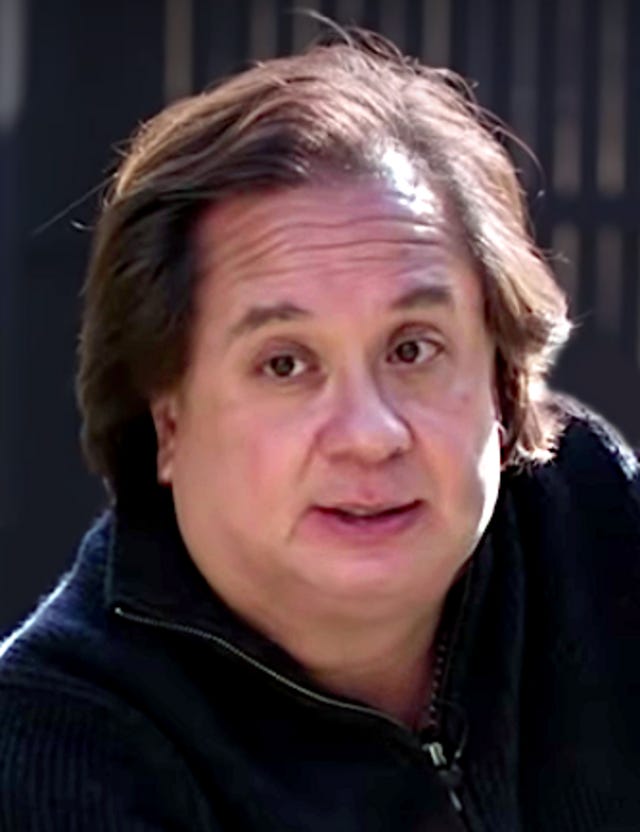
George Conway is the ex-husband of Kellyanne Conway, the Republican operative who led Trump’s 2016 campaign. They met after he saw a picture of her on the cover of a magazine, and asked mutual friend Ann Coulter for an introduction. He knew Coulter from their work together on Paula Jones’s 1994 lawsuit against President Bill Clinton. Before meeting Kellyanne, he dated Laura Ingraham. The point here is that “former Republican” greatly understates Conway’s past. He was not a moderate, normal guy who happened to vote for John McCain and Mitt Romney because he liked McCain’s hawkish foreign policy or Romney’s lust for cutting healthcare benefits for the elderly. He was on the frontlines of the culture war. The only reason he did not have a show on Fox News was that he was too busy making millions of dollars as a litigator for Wachtell.
Conway has been on a journey since then. In 2019, he co-founded the Lincoln Project, a political operation of anti-Trump Republicans that aims to restore the Republican Party to its pre-Trump glory, and shame Republican voters into supporting someone else, someone who respects the rule of law, will abide by the results of fair and free elections, and who can shred the social safety net with more gravitas and decorum. The Lincoln Project has been about as successful as you’d expect it to be. Turns out Republican voters really like this Trump guy, no matter what clever tweets Conway and co throw at them.
I’m maybe being a bit too harsh. It is important that there are people building the infrastructure for Republicans to abandon ship, for whatever fraction of Republicans there are that still might. More recently, Conway has contributed content to Tim Miller’s publication the Bulwark, which has been home to some of the clearest anti-Trump voices of his second term (interestingly, Cameron Kasky also made content for the Bulwark, co-hosting a podcast with Tim Miller for a few months last year.) Conway also helped represent E. Jean Carroll’s successful sexual assault suit against Trump. In 2023, he announced that he and Kellyanne had divorced. He has apparently changed his registration and become a Democrat. People change, and I applaud Conway for his directionally-correct mid-life crisis.
But there’s just no way Manhattan liberals are going to be at all interested in this guy. I mean come on! “Democratic voters are not about to elect the former president of Yale’s chapter of the Federalist Society to succeed Rep. Jerry Nadler,” political strategist Chris Sosa told the New York Post after Conway announced his candidacy two weeks ago. I don’t have much to add there. Conway has no chance of winning this race, and I would be surprised if he gets more than 5% of the vote.
And there is something vaguely annoying (to me, anyway) about the tone Conway uses to call out Trump, even though all the words are good and true and correct. His specific variety of outrage implies a degree of shock. “We have a demented, criminal president running the country like a mob operation—government by the boss, for the boss,” Conway captioned his announcement video. “You may find it hard to believe,” he tells us in the video. “But it’s happening.” My guy, this is year ten! We don’t find it that hard to believe anymore.
Eight years ago, two years into Trump’s first term, John Mulaney recorded his special Kid Gorgeous at Radio City Music Hall, and compared Trump to a horse loose in a hospital. Even then, everyone was kind of sick of the person in their lives who would get really worked up about whatever crazy thing Trump had just done. It was boring, and showed a kind of naiveté. “And then you go to brunch with people,” Mulaney joked. “And they’re like ‘There shouldn’t be a horse in the hospital!!!’ and it’s like ‘We’re well past that.’”
I do credit Conway for realizing that there shouldn’t be a horse in the hospital. But everyone else has been saying this for a while, including all the other candidates in this race. That opinion alone won’t get you very far here. We’re well past that.
Correction: A previous version of this piece included a sentence about Micah Lasher’s mother's involvement with the West Side Democrats club, and how that helped Lasher get his start in UWS politics. I got the order wrong, Lasher’s mother joined West Side Democrats after Lasher had already begun his career. I regret the error.