

Programming Note: The next three episodes of my NY-12 podcast series District Twelve are out now. If you’re interested in this blog, I think you’ll really like them. You can find my conversation with political strategist Chris Sosa here, with campaign finance reform researcher Grady Yuthok Short here, and with YIMBY advocate Sam Deutsch here.
“A primary is hard to forecast with a model, but it’s just as hard to forecast without a model, [because] a model gives you discipline,” Nate Silver wrote in the Spring of 2016, in his mea culpa on why he failed to predict Trump’s overwhelming victory in the Republican primary. “And discipline is a valuable resource when everyone is losing their mind in the midst of a campaign.”
Like Silver in the 2016 Republican presidential primary, I do not have a statistical model to forecast the NY-12 race. It’s not that I’m too lazy, or don’t know how to make one.1 There’s just not enough polling data. When Nate Silver builds his general election presidential forecast model, he gets five to ten new public-facing polls a week to feed into his number-crunching machine. Local elections nerds like Michael Lange do not have that luxury. Even in an extremely well-funded city-wide mayoral primary, there were maybe ten high-quality polls over the course of the entire race. Lange’s famous block-by-block prediction did not rely on a polling model, just a spreadsheet of every precinct’s demographics, past local election results, and Lange’s personal, artisanal sense of the vibes. And that was a city-wide race. For a congressional district with only a few hundred thousand voters, I assumed I’d have to rely on vibes alone, at least until May. I’d have to find the discipline that Silver described somewhere else.
Instead, this week, we got three different polls. They are all internals, which means they were commissioned by a campaign or interest group, and probably skewed their methodology to boost their side a bit. But they are all from well-respected pollsters, and contrary to what I sarcastically tweeted last week, everyone I’ve talked to agrees that none of them are “fake.” And their results are shocking.
The Conway campaign’s internal, from the pollster GQR, has Schlossberg with 25%, Conway with 16%, Bores and Lasher tied at 11%, and 33% undecided. Bores’s internal, from Public Policy Polling, shows a virtual three-way tie, with Bores at 20%, Lasher at 19%, Schlossberg at 18%, and Conway at 13%, with 30% “not sure.” And Schoen Cooperman, working for the anti-Bores AI supervillain PAC Leading the Future, has Schlossberg with 23%, ten whole points over Conway at 13%, Bores at 11%, and Lasher (!) at 6%.
“Discipline is a valuable resource in the midst of a campaign when everyone is losing their minds,” Silver said. If you want discipline, check out the Kalshi market for this race. On March second, before any of these polls came out, Kalshi gave Lasher a 55% of winning, Bores 24%, and Schlossberg 12%. Yesterday morning, when I started writing this, it was Lasher at 54%, Bores 22% and Schlossberg 25%. According to the smart money, essentially nothing of note has happened in the past two weeks.
But if you want to hear from someone who is losing their mind, read this blog. Right around March second, I confidently told AMNY reporter Adam Daly that I believed Lasher had about a 70% chance, Bores had a 25% chance and Schlossberg had maybe 2%. At one point he asked me straight up: “can you tell me what it would take for Jack to win?” I thought about it for fifteen seconds and then smugly replied: “No, I really don’t see a path.”
Yesterday, after these polls, I told someone that I think Jack is the favorite, and might be more likely to win than everyone else combined. I have no discipline and I am losing my mind.
In fairness, it’s not just me. On Thursday, the Lasher campaign rolled out its Mike Bloomberg endorsement package, which included posts from both Bloomberg and Lasher’s accounts, and a full-length Nicholas Fandos piece in the Times, where Fandos reported that Bloomberg would personally contribute $5 million to a Lasher-aligned SuperPAC. Superficially, this is a display of strength. Bloomberg is easily the most popular living mayor among NY-12 residents, he still has plenty of connections among NYC politics powerbrokers, and most importantly, he has billions of dollars and no compunction about shoveling millions of them into campaigns he likes.
But Bloomberg’s support was always a virtual guarantee for Lasher, who served as the former mayor’s lead state policy negotiator in Albany fifteen years ago, and has remained close ever since. Lasher likely could have announced this endorsement the day he launched his campaign if he’d wanted to. He didn’t, probably because he would like to keep himself open to as many different voters as possible for as long as he can, and allying with a polarizing figure like Bloomberg so firmly will turn off more than a few people. In a now deleted Tweet, mayoral candidate, anti-Mamdani stalwart, and former guest of the Ghost Runner extended podcast universe Whitney Tilson wrote that he was excited to endorse Lasher as well, and that he was excited about electing leaders like Lasher and Dan Goldman to Congress. “If Bloomberg and Tilson are backing Micah Lasher, it’s official Alex Bores o’clock for me” responded popular progressive strategist Adam Carlson. By the end of the day, both Schlossberg and Bores issued fiery statements about how they were proud not to be funded by shady billionaires.
To be clear, a Bloomberg endorsement probably wins more voters than it turns off in this district. But still, this is an entirely predictable backlash that Lasher would have liked to delay if possible. Last year, for example, Cuomo’s campaign did not announce Bloomberg’s endorsement (and accompanying infusion of ten million dollars into his affiliate super PAC) until a few weeks before Election Day. The fact that Lasher’s team decided not to delay any further, that they wanted the endorsement boost (and cash) now even if it came with some blowback, indicates that I am not alone in losing my mind about these polls. They are acting like they also believe that Schlossberg might be in position to win this thing, and they are adjusting their strategy accordingly.
How is this possible? For months now, I’ve told you that local community connections win these elections, that Lasher is dominating the battle for endorsements, that inexperienced outsiders have an extremely narrow path to victory here because these local groups are so popular and so entrenched, and that Jack Schlossberg in particular has neither the technical skills nor the local connections to walk that narrow path.
These polls have forced me to reexamine all of these arguments. And while I’m not ready to go full Nate Silver mea culpa “How I Missed Trump” yet, I do think there are a few points where my reasoning has been a bit sloppy. If you break it down, I’ve been saying two different things: First, that Schlossberg practically does not have the ability to win over voters in this district, and second (lurking in the background), that I think he’s an unserious candidate who would be a bad Congressman, that I find his candidacy so vapid it’s kind of insulting.
I’ve blurred these arguments together, using anecdotes of him flubbing an answer at a candidate forum or being unable to speak coherently for more than ten minutes at an event I attended, as evidence that voters won’t find him compelling. But those anecdotes are really evidence that I personally don’t find him compelling. And I only vote once.
And, if I’m honest, these anecdotes are not really the core of why I am not a fan. I’m not a figure-skating judge. I’m interested in this race because I think it matters a lot, because our next congressperson will have a lot of power, and because I have strong opinions on how they should wield it. Jack Schlossberg could be a much stronger public speaker (and it seems like he has gotten better over the course of this campaign), and I’d still believe that he would wield power extremely poorly.
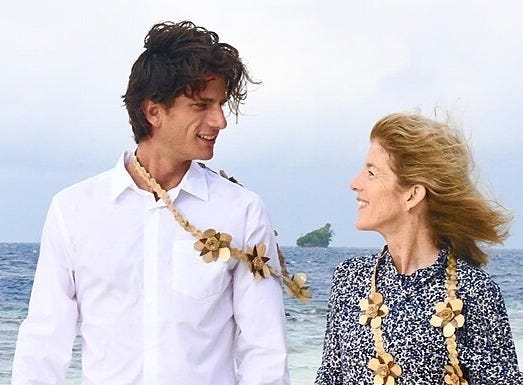
Your mileage may vary, though. “Politics is about making the community feel heard,” local political strategist Chris Sosa told me in our conversation this week. I was thinking about this quote when I watched Sosa interview Schlossberg at an event at Inspir Carnegie Hill, an assisted living facility on Second Avenue. “I want a future where people believe in something again.” Schlossberg told the crowd. “In the past, people believed in government. People believed in the federal government’s ability to solve problems, that Congress was confident, that the government cared about them.” He then discussed his connection to this past, describing the legacy of his grandfather, who “fought communism” and “fought for civil rights,” his mother’s (relatively recent) work as a diplomat, and how the two of them took a trip last year to a small island in the South Pacific (he went into a lot of detail about this, and about how they had to take three different planes to get there), where his grandfather had fought heroically in World War II.
This is basically Schlossberg’s pitch. You can watch the rest of the interview if you want, but I promise you will not find a more coherent distillation of his political identity and agenda in there. He does not mention a key issue that he’s passionate about, or a subgroup of constituents that he wants to lift up and advocate for, or any other overarching theme to his campaign. He’s running because he wants you to believe in something again. That’s his slogan. “Believe in Something Again.” It doesn’t make me feel heard.
For one thing, it doesn’t make me feel heard because as a policy nerd, I’m annoyed by the vagueness. Believe in what, exactly? That vagueness is particularly concerning in this race, because parachuting into local politics with no prior experience (or seemingly, prior interest) has made him an exceptionally easy mark. I do not believe that past experience as an elected official is always necessary, or even good, for a politician, but one thing it does train you in (if you’re serious about it), is the ability to calibrate, or even tune out, the loud voices of a well-organized, highly-concentrated interest group that claims to speak for everyone, even though they make up a tiny minority of your constituency.
Schlossberg does not have this ability. In his first foray into local politics, he has forcefully sided with Layla Law-Gisiko’s movement to resist the NYCHA RAD-PACT redevelopment of the Fulton Elliot Chelsea complex. I got into the weeds on this on this project in my conversation with Sam Deutsch this week (and there are a lot of weeds), but the rough shape of it is that NYCHA wants to demolish and rebuild a public housing complex in Chelsea, build all the current tenants brand-new apartments, and pack a lot of new affordable and market rate housing into the complex to cross-subsidize the whole project. Law-Gisiko (who is not a NYCHA resident), and a minority of current residents, oppose this, and believe that NYCHA should repair the existing buildings and not build anything else. NYCHA would love to do that, but they have a $78 billion, and steadily growing, backlog of capital repairs, and absolutely no line of sight on that money. The federal government is really the only possible solution for a need of that size. NYCHA has asked for federal help for decades, and one HUD director after another has essentially spat in their faces. So they’ve been forced to get creative, and this project is a tangible way to give current residents the modern, livable housing they deserve, while also unlocking excess value for the neighborhood and the city. Law-Gisiko and co would prefer that they do not do this, and instead figure out a different plan for current tenants, later, maybe.
To Schlossberg (and Alex Bores, who won Law-Gisiko’s Chelsea Reform Democrats Club endorsement last month) this is a story of a downtrodden group of tenants fighting the good fight against the evil forces of extractive capitalism. To Micah Lasher, who told the Chelsea Reform Democrats Club that he supports the project because there is no other viable option, this is a story about tradeoffs, and about not letting the perfect be the enemy of the good. Bores probably made a calculation that he could win the endorsement with some light sympathetic signaling, and hasn’t talked about it since. Schlossberg lost the endorsement, but has made this the core local issue of his campaign anyway. Going all in on the first well-organized constituency group that knocks on your door, to the detriment of all your other constituents, is (to me) almost the definition of a “rookie mistake.”
Schlossberg has developed an eclectic mix of other policies that he believes set him apart in this race. They are, almost without exception, tax cuts! He wants renters to be able to deduct rent from their taxes, something that would be nice for me, but even nicer for someone who pays three times as much as me in rent. He wants actors to be able to deduct their representation expenses from their taxes. If you come to him with a sympathetic interest group, he’ll probably find a way to cut your taxes too. This isn’t just a Schlossberg thing, in fairness, there are lots of Democrats trying to jump onto the affordability wave with proposals for sweeping, progressive-sounding tax cuts right now, including Cory Booker, Chris Van Hollen, and Katie Porter. We have a $2 trillion deficit, along with a weakened dollar that makes debt financing increasingly expensive, and as a progressive who actually does “believe in government” and who actually does want the social welfare state to be able to fund things like, for example, renovations to public housing stock, I find this really dispiriting. There is a whole political party dedicated to winning votes by offering voters personalized tax cuts. They’re called Republicans, and if Schlossberg (and Porter, and the others) want to do politics this way, I’m sure the GOP would be happy to have them. This, again, is a pitfall of a candidate who wants to believe in something, and doesn’t care much what that something is.
But the “something” is not the important word in Schlossberg’s slogan. It’s “Again,” a word that, not coincidentally, is also the final word of a different, extremely popular political slogan. “Wouldn’t it be nice if everything was basically the same, except things were a bit calmer and we didn’t have to deal with this angry Trump guy?” Schlossberg seems to offer. Or, to put it more bluntly, “Wouldn’t it be nice if it was the 1960s again?”
Who does this make feel heard? Certainly not me. I have absolutely no nostalgia for that time, when the Vietnam War was beginning, there was still not enough political support in Congress for the Civil Rights Act, and the median American family’s income was less than $50k in today’s dollars. As a former criminal justice reform researcher and advocate, I have a hard time having nostalgia even for 2015, when the Obama administration eagerly deported hundreds of thousands of people and New York City’s bail laws let Black teenagers like Kalief Browder languish in Rikers for years if they were accused of stealing a backpack.
So that’s me. But who else might feel heard? Not the tens of thousands of Gen Z influencers who follow Schlossberg’s cringy social media content out of morbid fascination. They don’t have any more nostalgia for the 1960s than I do. And not the many members of the hyper-organized local political organizational machine, who resoundingly rejected Schlossberg at every single political club forum. “We want our Representative to be a scholar.” Daniel Marks Cohen of the Three Parks Independent Democrats told me last month. “We require depth.”
No, the demographic that Schlossberg’s campaign is laser-focused on is old people. Not the ones who follow local politics obsessively, go to political club meetings, and pass out literature on the street. But the others, the tens of thousands of Baby Boomers in this district who aren’t that locked in on a local level, but who watch MSNBC for hours every day, read every word that Heather Cox Richardson writes, freely donate to national Democratic campaigns, and most importantly, turnout to vote more than any other demographic. Crucially, this is the group of people that believes Schlossberg when he talks about how his social media presence gives him the experience and skills to fight the right in the modern age. People my age can be disabused of this claim with a quick perusal of his instagram content, or his disjointed, off-putting, vaguely Trumpy tweeting style. But the older voters of this district are more susceptible, not because they are inherently more gullible, but because they don’t use social media. If he says he’s a good poster, they’re more likely to shrug and take his word for it.
Politics is a spectator sport for most of these people (and I’m grateful for that, because many of you choose to spectate by reading my blog!) Not all! Some might have specific policy priorities, and on the Upper West Side especially, many have a long history of engaging meaningfully in local progressive politics. But for many others, in their heart of hearts, the sum of their political ambitions is that they would like the news that they watch and read every day to seem a little less scary. A nice, handsome young man with a connection to a politician they loved is offering them exactly that, and nothing more.
I have deep empathy for these people. The news has, in fact, gotten quite scary. They, like everyone else, deserve an elected official who makes them feel heard. I sincerely hope that another candidate gets in there and makes them feel that way too. They have a little more than three months to pull it off, but so far, there’s not a lot of evidence, polling or otherwise, that they will have more success than Schlossberg.
Correction: A previous version of this blog reported that George Conway had received 30% of the vote in the Bores internal poll. He only received 13% in that poll. I regret the error, and sincerely appreciate the many people who reached out to me today to correct it. In the old Ghost Runner days, it would take weeks before anyone noticed my egregious typos.
Longtime readers will remember my Taylor Swift surprise song prediction model, and I hope new ones will check out March Mania, a website I built with my friend Imran last year that runs tens of thousands of simulations so that you can handicap your bracket’s odds of winning your specific pool
Typo alert: “with Bores at 20%, Lasher at 19%, Schlossberg at 18%, and Conway at 30%, with 30% “not sure.”” The number for Conway is wrong.
Was great chatting with you about this race last week. The thing that is most flabbergasting about Schlossberg’s alliance with Layla is that Schlossberg actually supported the pro-housing ballot measures last fall that Layla was so outspoken in opposing.
Really goes to show that policy is a secondary, if not tertiary consideration for Jack. I wonder if he’s even aware of Layla’s long history as a NIMBY crank.